Review of the album “Tragom Republike”
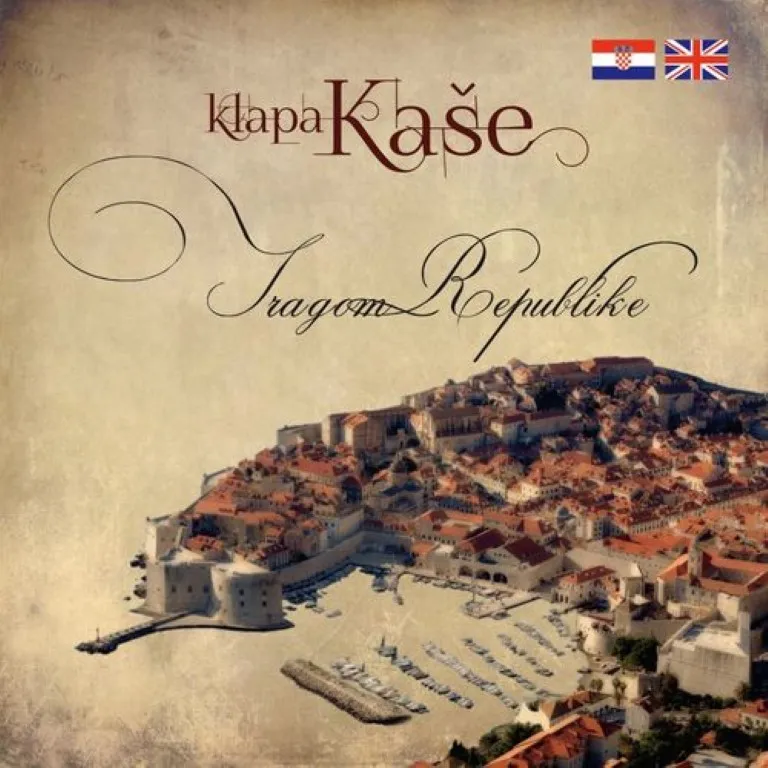
“The multi-award-winning klapa Kaše has released its second album, entitled “Tragom Republike”, gathering in one place songs of the Dubrovnik area taken from archives or from recordings more than half a century old.
Klapa singing has for some time been on UNESCO’s list of the Intangible Cultural Heritage of Humanity, but if you follow this genre superficially and are familiar with it today only through what radio and television offer, you might well wonder how that is possible. Because it would surely not be clear to you what the United Nations Educational, Scientific and Cultural Organization recognised in an idiom which increasingly, quite openly, enters the territory of pop music, standing out only by its recognisable multipart singing.
Klapa Kaše from Dubrovnik was probably aware for a long time of klapa expression drifting away from tradition, reputation and dignity; at a certain moment they probably also ‘snapped’ watching the trivialisation and the cover versions surrounding them, so they decided to take matters into their own hands.
They worked on this album for almost seven years, collecting materials and musical legacy, digging through the HAZU archives, leafing through the records of the ethnomusicologist Franjo Kuhač, looking at old maps of the Maritime and Ethnographic Museums, in order to acquaint the listener with the Republic of Dubrovnik, both through the album’s educational Croatian-English booklet and through its content.
There are eighteen songs on the album – more precisely fifteen, plus five ‘stihovanja’ of old texts by Dubrovnik poets accompanied by lijerica and guitar – which take you on a journey during which you will visit key Dubrovnik locations: from Konavle, Cavtat and Dubrovnik to Lastovo and the Dubrovnik littoral. Six of Kuhač’s records were adapted and arranged by the klapa’s leader Vicko Dragojević, who is credited with the arrangement and adaptation of as many as sixteen tunes.
Someone may think that “Tragom Republike” is an ordinary release of cover versions of old klapa records, but one needs to look a little ‘deeper’. Music is not timeless; it usually arises and is tied to a certain time and place, and it should be experienced as such. In order for some songs and compositions to be enjoyed, and for them to be interpreted and listened to as they were conceived, the conditions of their creation need to be adapted to the present day. In other words, to play more on the card of creating authenticity than on the card of imitating it.
And when someone today, in the instant age we live in, decides to ‘spend’ seven years on research before recording an album, you can be sure that they are driven by immense love, respect, devotion and pride towards the legacy. There is no sloppiness or carelessness that would lead to ‘offending the reputation and honour’ of the Republic (and indirectly of klapa singing in general), and when you first hear their voices you will not be able to escape the impression that they are fully aware of the importance of their mission. Their aim is not so much to impress the listener (which they undoubtedly succeed in doing) as to teach them how to tell klapa wheat from klapa chaff.
Klapa Kaše got its name from the breakwater located in front of the old city harbour, and it symbolises the klapa as a breakwater of the multipart singing of the Dubrovnik area. They sing, and the Republic smiles.”
Stjepan Vrečko